
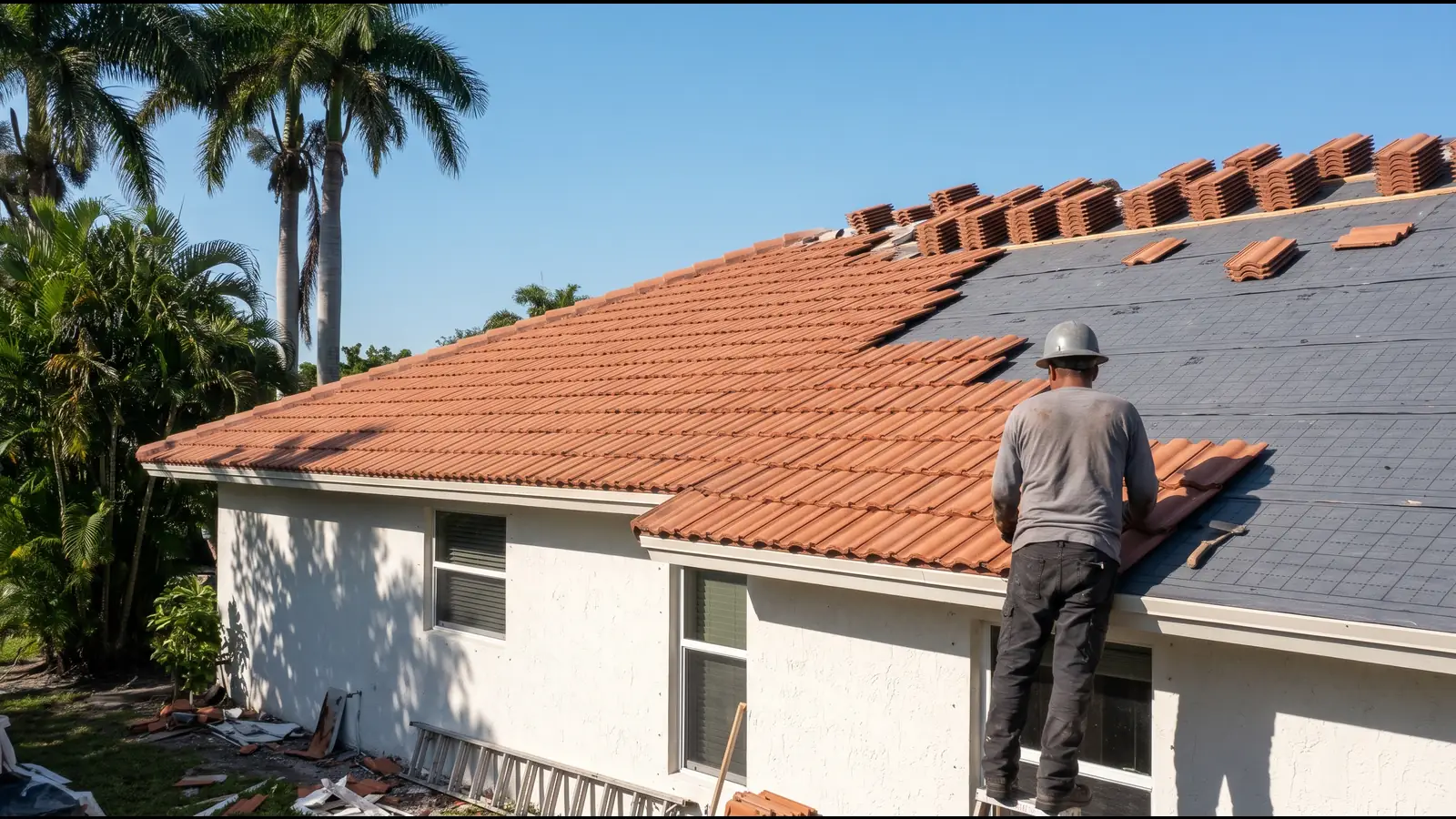
Tile Roof Flashing Repair by Where the Metal Sits
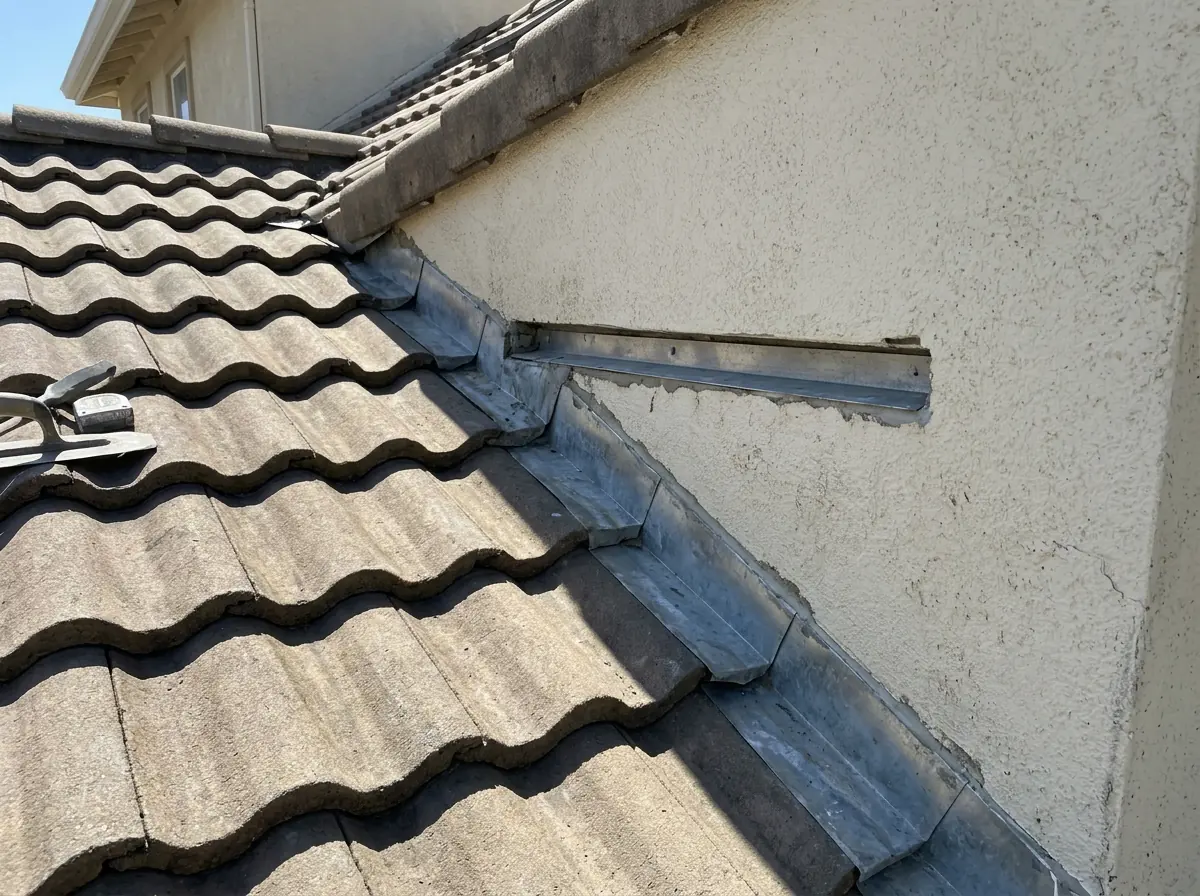
Headwall and Sidewall Flashing
Where a tile slope runs into a stucco wall, an "L" of metal lies on the underlayment and turns up the wall, and a counterflashing above it covers its top edge. HVHZ code lets that counterflashing be built into the wall, set in a reglet or applied as stucco-type metal. The manual has the tile cut to sit within 1 inch of the finished wall. Where wall flashing ends at an eave, it should run at least 1 inch past the eave with a cut "kicker" that throws water away from the wall. Stucco may have to be cut back to replace counterflashing, so ask whether patching and painting the wall is in the price.
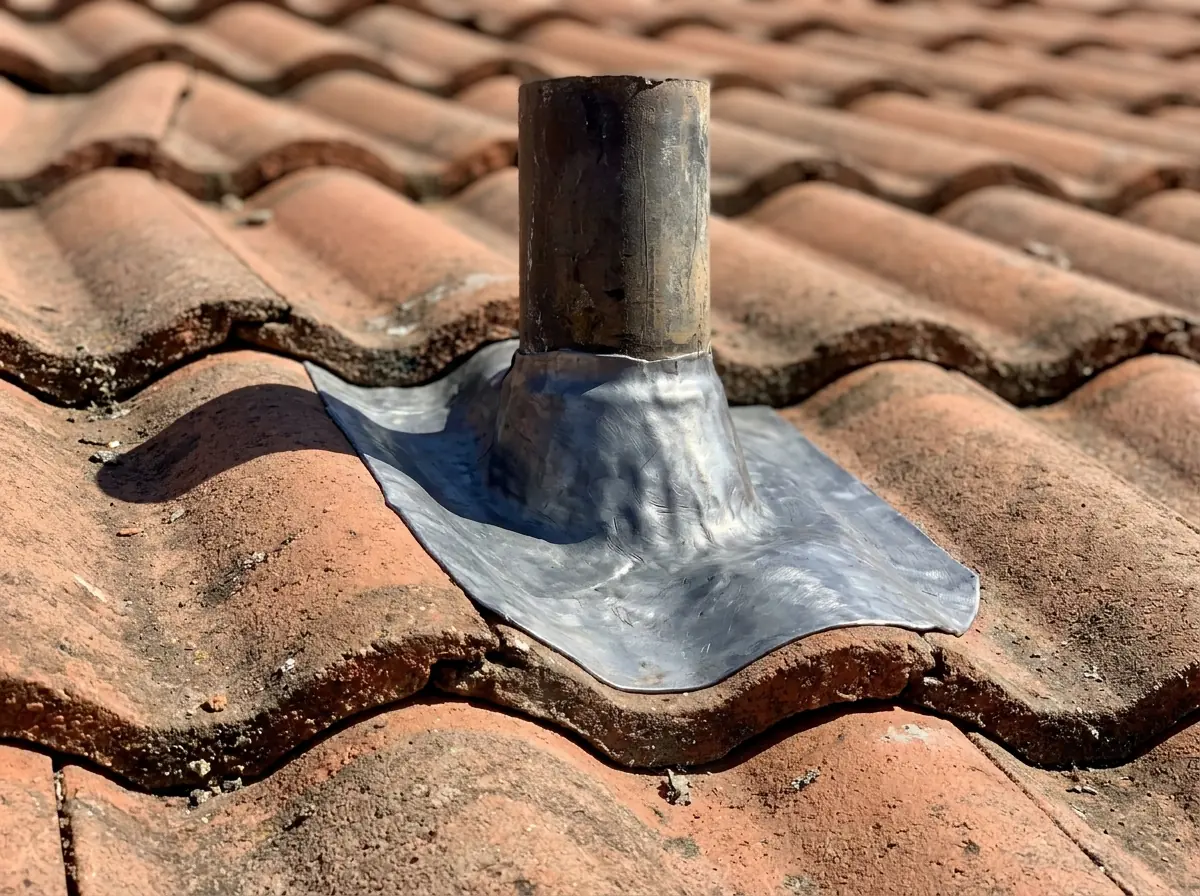
Pipe and Vent Penetrations
Plumbing vents, exhaust stacks and attic vents all pierce the tile. HVHZ code requires pipes to be flashed with an approved lead sleeve, a pitch pan or another method in the system's product approval. On pipes, the manual's pre-formed option is a lead or flexible skirt that weaves into the tile courses. HomeGuide's national figures put vent pipe flashing repairs at about $200 to $500.
- Lead weight: at least 2.5 pounds per square foot
- Flanges: at least 4 inches
- Skirt base: at least 18 x 18 inches
- Pipe height: at least 2 inches above the nearest finished tile
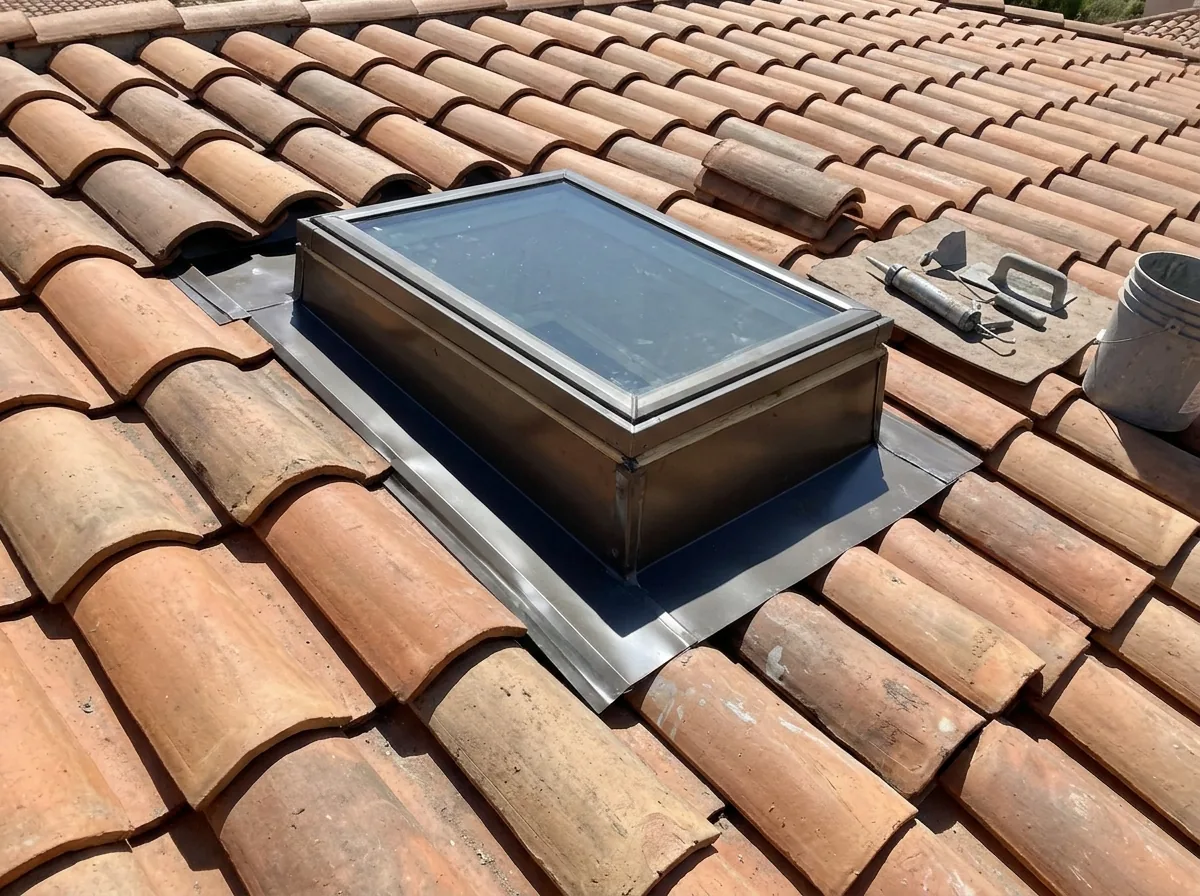
Chimney and Skylight Flashing
The manual has chimneys and curb-mounted skylights flashed with the same procedures as the rest of the roof's flashing. For self-curbing or prefabricated skylights the manual defers to the skylight maker's instructions, so ask which brand and model you have before the roofer orders parts. HomeGuide's guide puts skylight flashing repair at roughly $150 to $500 and chimney flashing repair at $200 to $850. If the skylight itself is cracked or fogged, that's a separate replacement price.
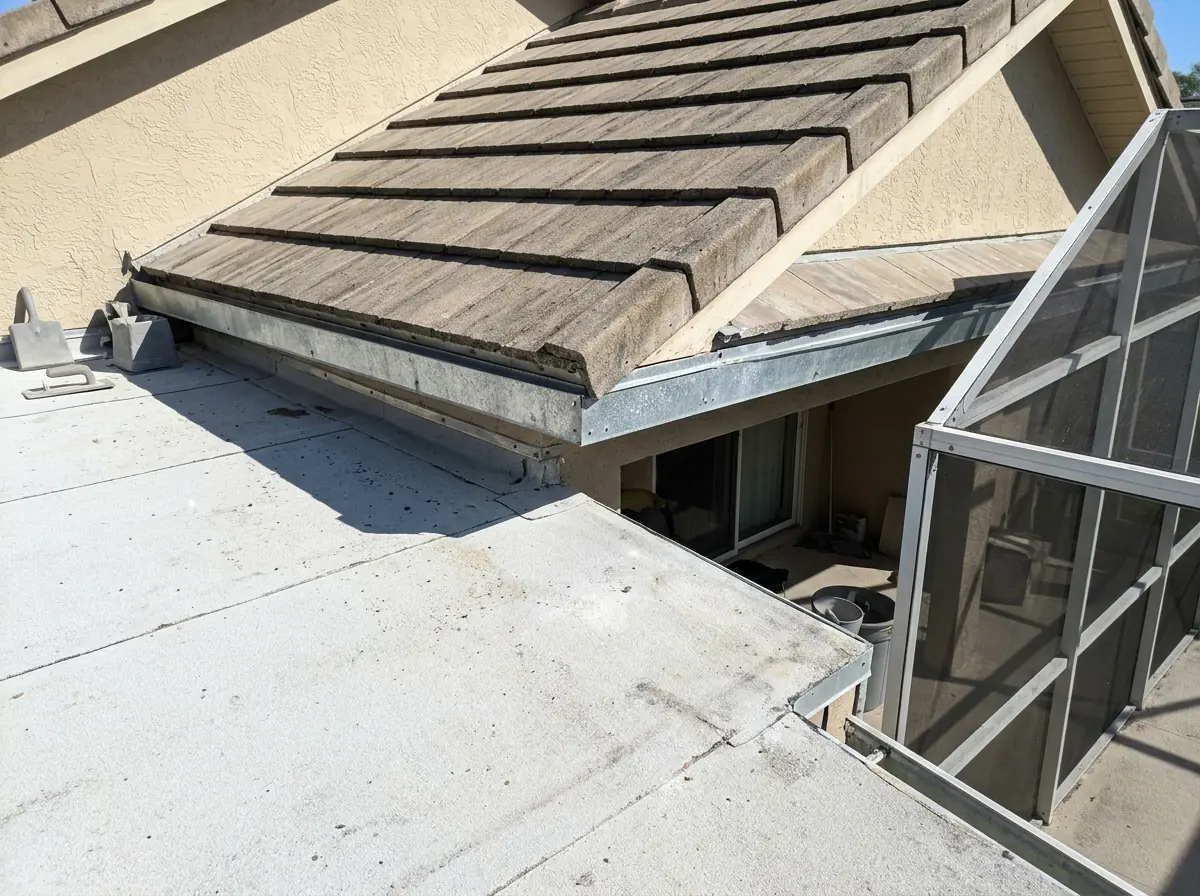
Tile-to-Flat-Roof Transitions
Some homes have a flat porch, carport or addition tucked against a tile slope, with flashed metal along the joint between the two. The Florida Building Code's general roofing section calls for flashing wherever a roof changes slope or direction. The repair sits on the tile side: the bottom courses come up, the metal and underlayment at the transition are replaced, and the tile goes back. Ask whether the flat roof's membrane will be opened to tie the new metal in, and who is responsible for that side.
Why Pompano Beach homeowners call Pompano Tile Roofing
- Free to call, free to request a quote
- One independent local tile roofer per request, not a bidding list
- Ask for tear-off, underlayment, deck repair and permit on one written price
- Your details go only to the roofer handling your request
What to Ask Before Flashing Is Replaced
New metal where the old is worn
The Florida Building Code bars reinstalling rusted, damaged or deteriorated vent flashing, metal edgings and counterflashing.What the metal is
Ask for the metal type and gauge in writing; HVHZ code sets minimums for steel, copper, aluminum and lead, and the valley page lists them.Laps and sealant
The manual laps optional counterflashing at least 2-1/2 inches over the wall flashing and laps its joints 6 inches; HVHZ code side-laps counterflashing 4 inches. Ask how the joints will be sealed.Paint
The manual allows color-matched paint on metal flashing. Ask whether it's included if bare metal will show against the stucco.The permit
Flashing is roofing work, and HVHZ code requires a permit for roof repairs; tile roof replacement covers how that works.
If you aren't sure the flashing is the source, start with tile roof leak repair.