
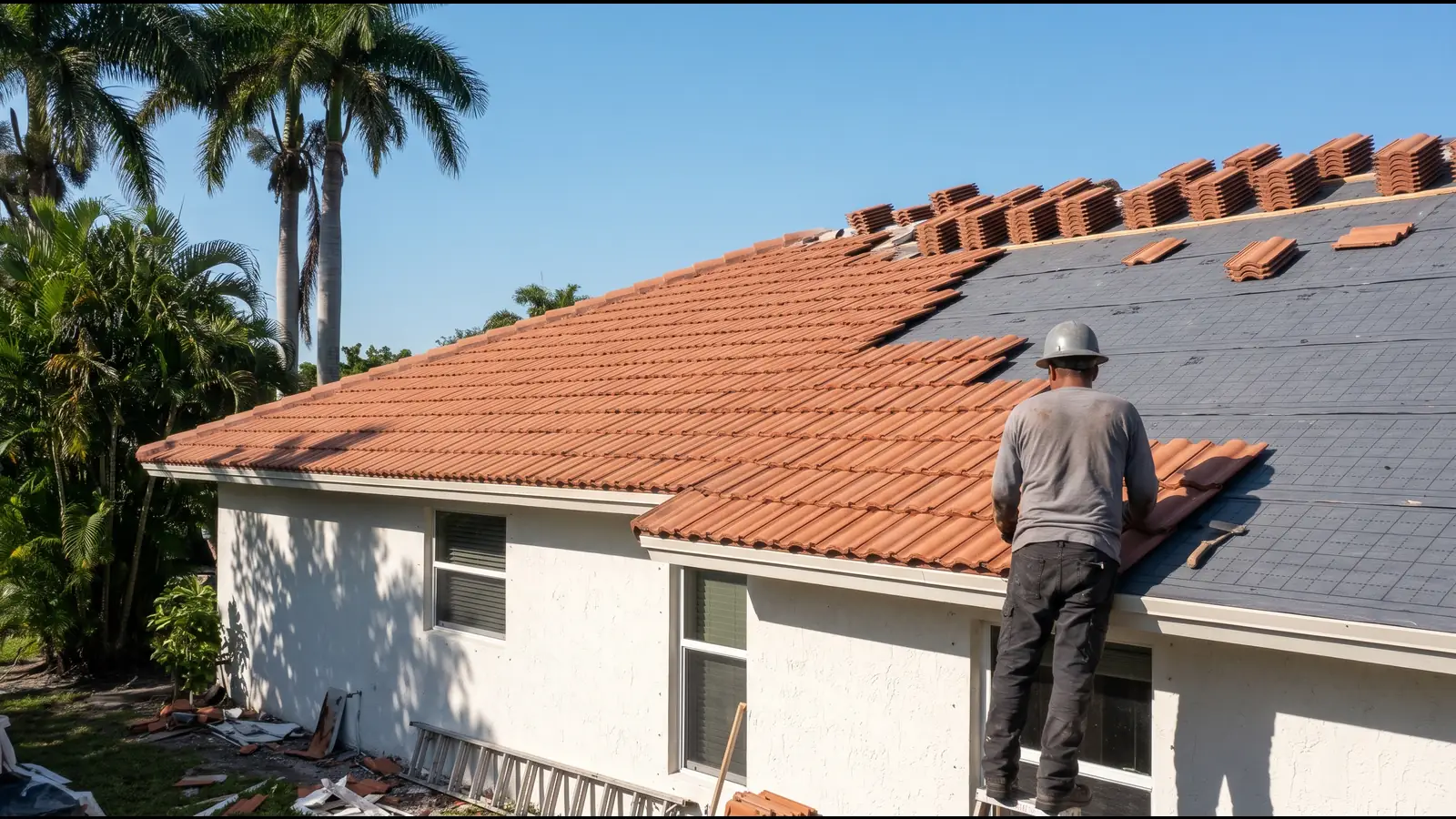
Tile Roof Valley Repair by Valley Problem
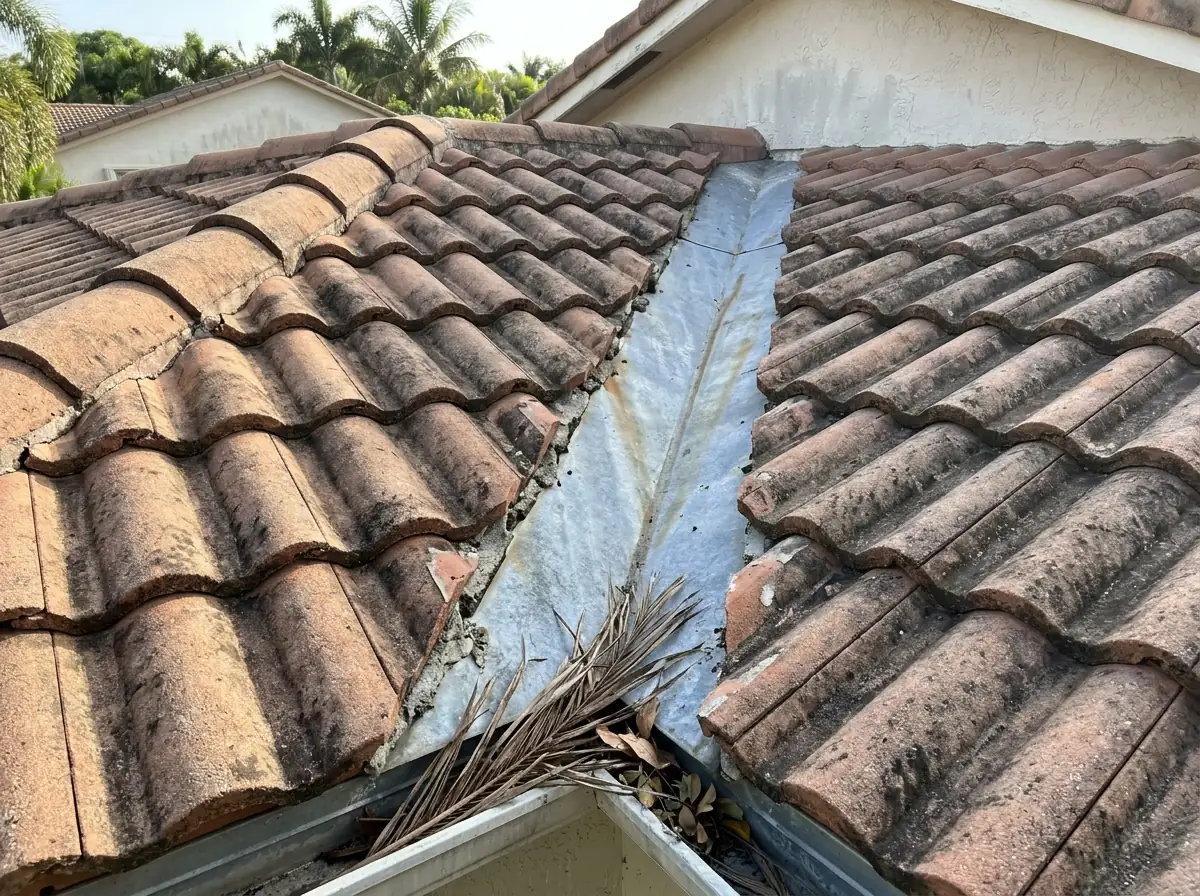
Open Metal Valleys
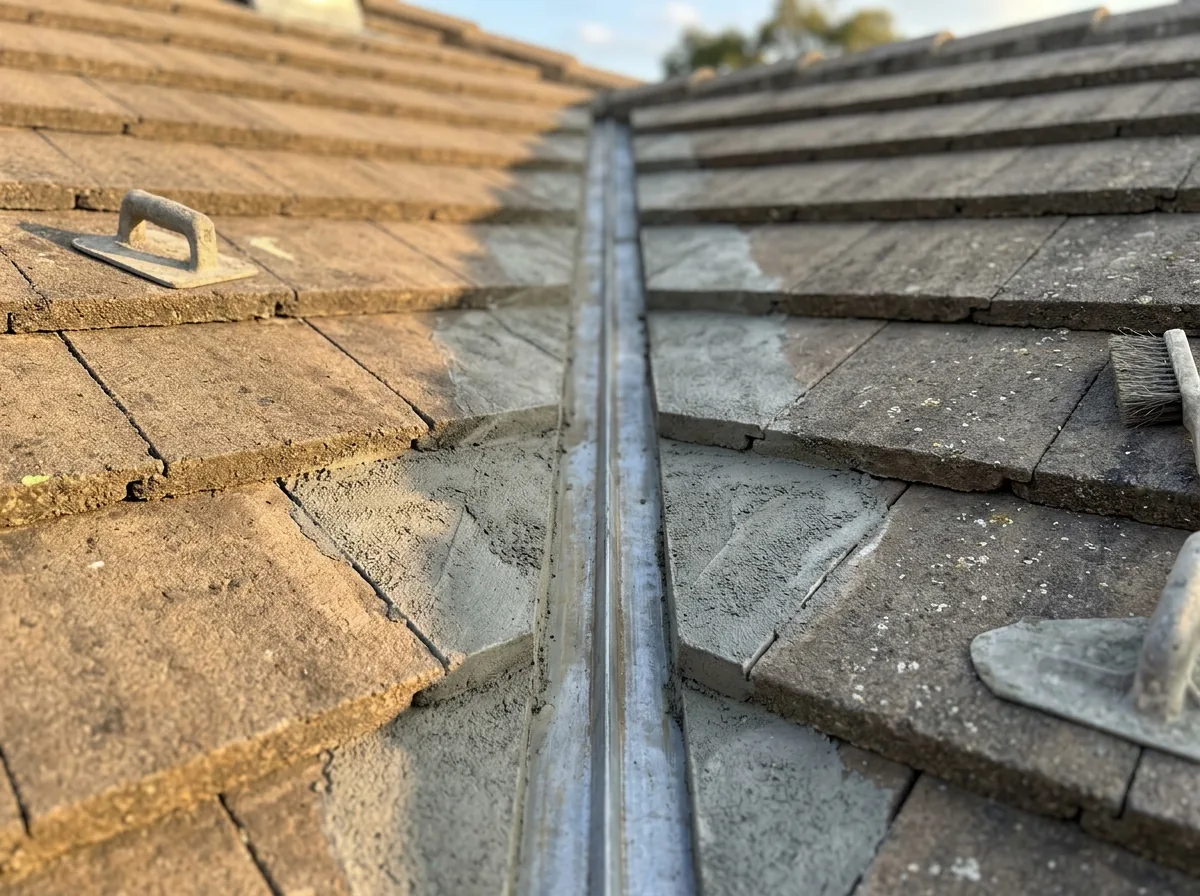
In an open valley the metal stays visible down the middle and the tile stops short of it on both sides. The manual has the roofer chalk a line at least 2 inches either side of the valley center and miter the tile to a straight border along it. The metal starts at the bottom and works up the roof, and its center has to run at least 2 inches past the drip edge. Florida's HVHZ code also bans any roof penetration inside a valley, so ask about any pipe or vent that sits in one.
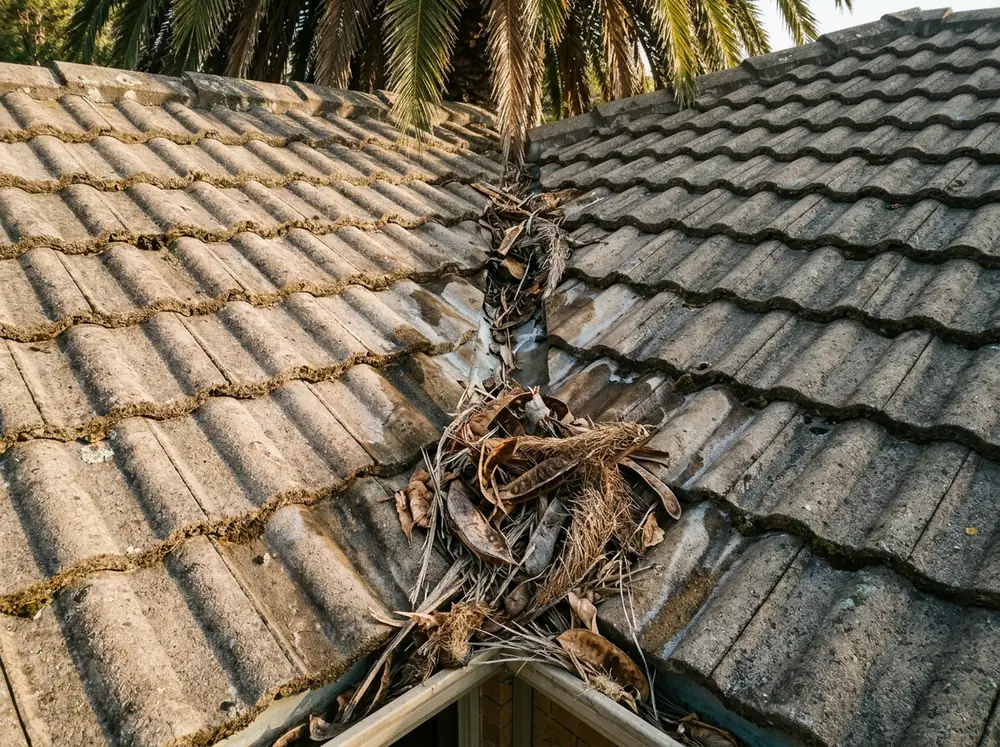
Debris-Dammed Valleys
Fronds, seed pods and leaves settle in valleys and pile up against the cut tile edges. The raised diverter and the metal's edge returns are there to keep water in the channel, and a dam of debris pushes it sideways toward the tile edges instead. Clearing the valley is a cleaning job, covered on tile roof cleaning. If water has already been running over the edge for a while, ask the roofer to lift a tile or two and check the underlayment beside the metal.
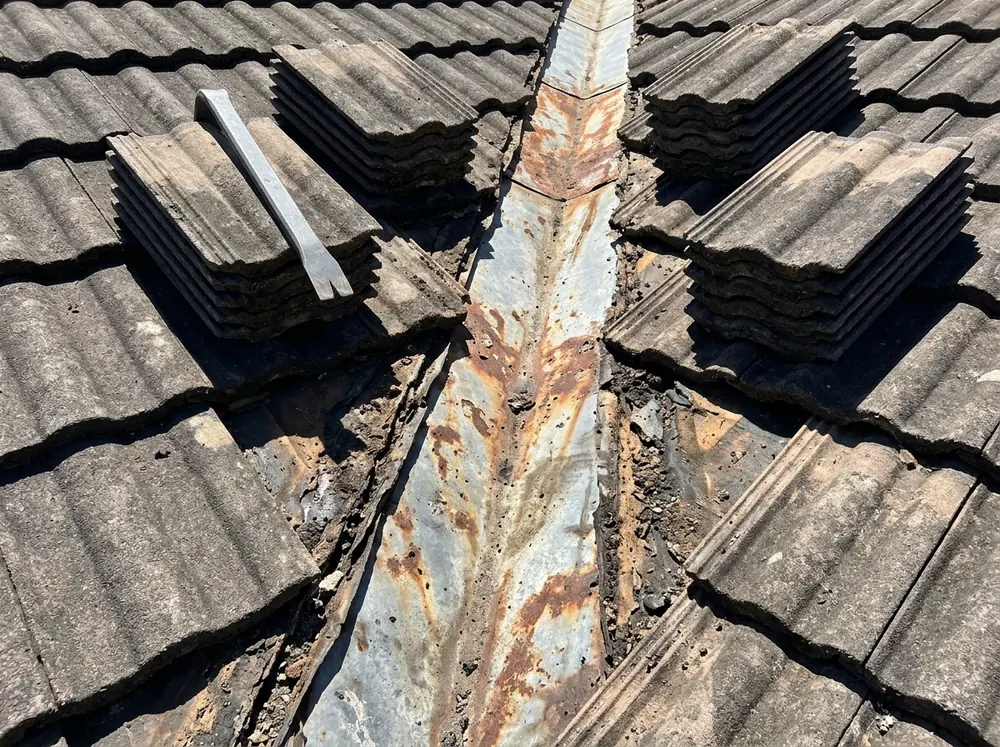
Rusted or Undersized Valley Metal
When valley metal has rusted through or is narrower than today's minimum, cleaning won't help; the metal has to be replaced. The code's metal minimums inside the HVHZ are in the bullets above. The manual adds the installation details a buyer can check on the quote:
- Width: at least 16 inches, 24-inch stretch-out
- Laps between pieces: at least 6 inches, set in flashing cement, sealant or a solid coating
- Fastening, metal without edge returns: every 6 inches with 12-gauge corrosion-resistant roofing nails near the outside edge
- Fastening, metal with edge returns: clips at no more than 16 inches, with no nails through the flange inside the returns
Cut Tiles and Mortar Along the Valley
Every tile beside a valley is cut on an angle, and the manual gives the small cuts their own attachment step: it says to raise the nose of the tile in the course above the small cut, set it in adhesive and press it into place right away. It advises against trim tile in valleys, and it limits a mortar bed along an open valley's chalk line to granular-surfaced underlayment. Cut tiles that slide into the channel, or mortar that has spilled across it, narrow the waterway and should come out.
Why Pompano Beach homeowners call Pompano Tile Roofing
- Free to call, free to request a quote
- One independent local tile roofer per request, not a bidding list
- Ask for tear-off, underlayment, deck repair and permit on one written price
- Your details go only to the roofer handling your request
How a Tile Valley Gets Rebuilt
- STEP01
Lift the tile on both sides
The cut tiles come up and are stacked on the roof. Any that crack in the process can't go back on, so ask how replacements will be matched.
- STEP02
Renew the valley underlayment
One option the manual gives for a single-ply system is a 36-inch-wide strip of self-adhered underlayment laid down the center of the valley before the main sheets.
- STEP03
New metal, bottom to top
The metal goes in from the eave up, lapped and fastened as above, overlapping the drip edge.
- STEP04
Re-set the tile and inspect
The tile is mitered back along the valley. Valley work is a roof repair, so in the HVHZ it runs under a permit; the replacement page explains how roofing permits and inspections work in Pompano Beach.
Wall, pipe and skylight metal is a separate job: see tile roof flashing repair.