
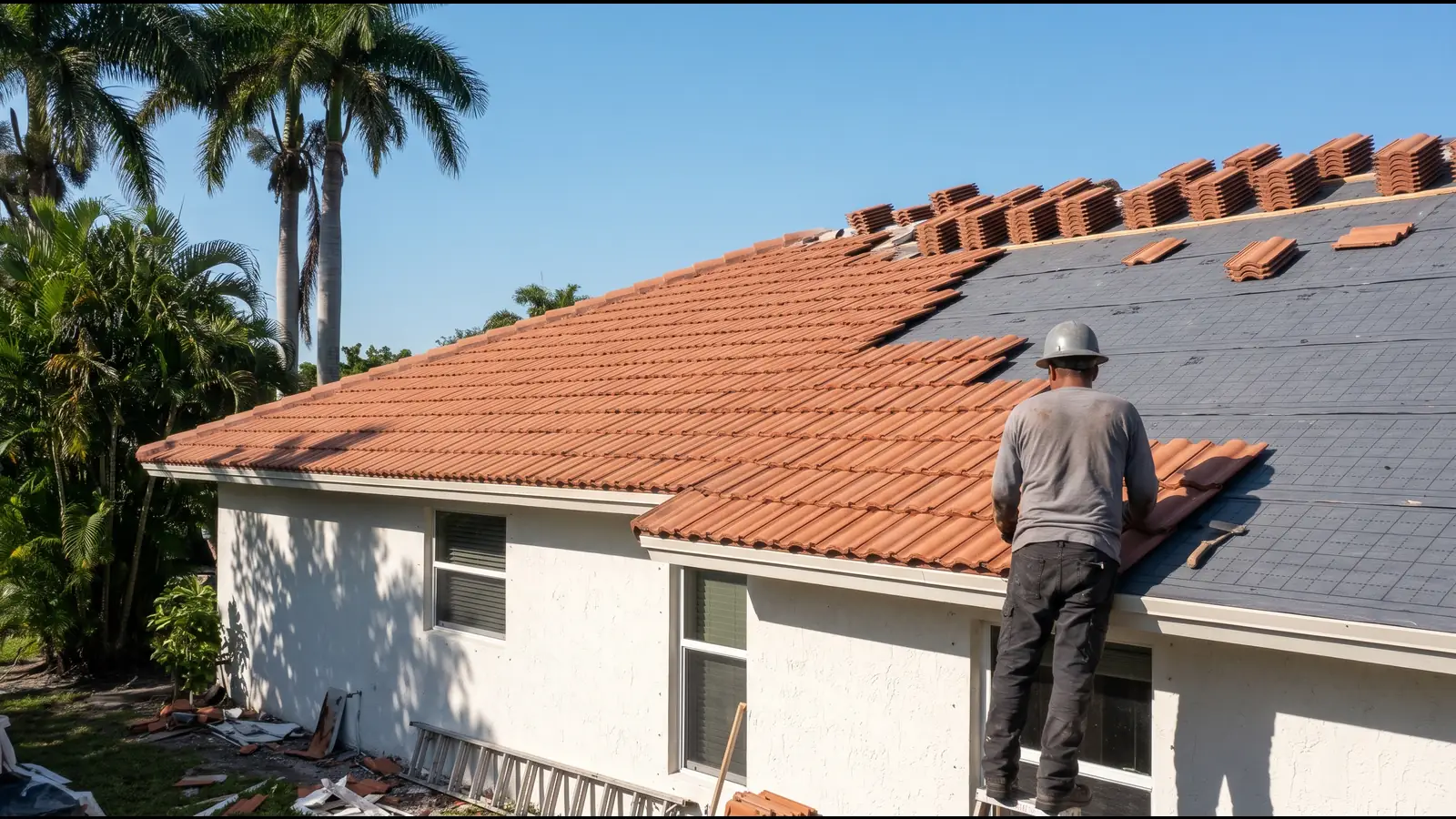
Tile Roof Underlayment Replacement Methods and Materials
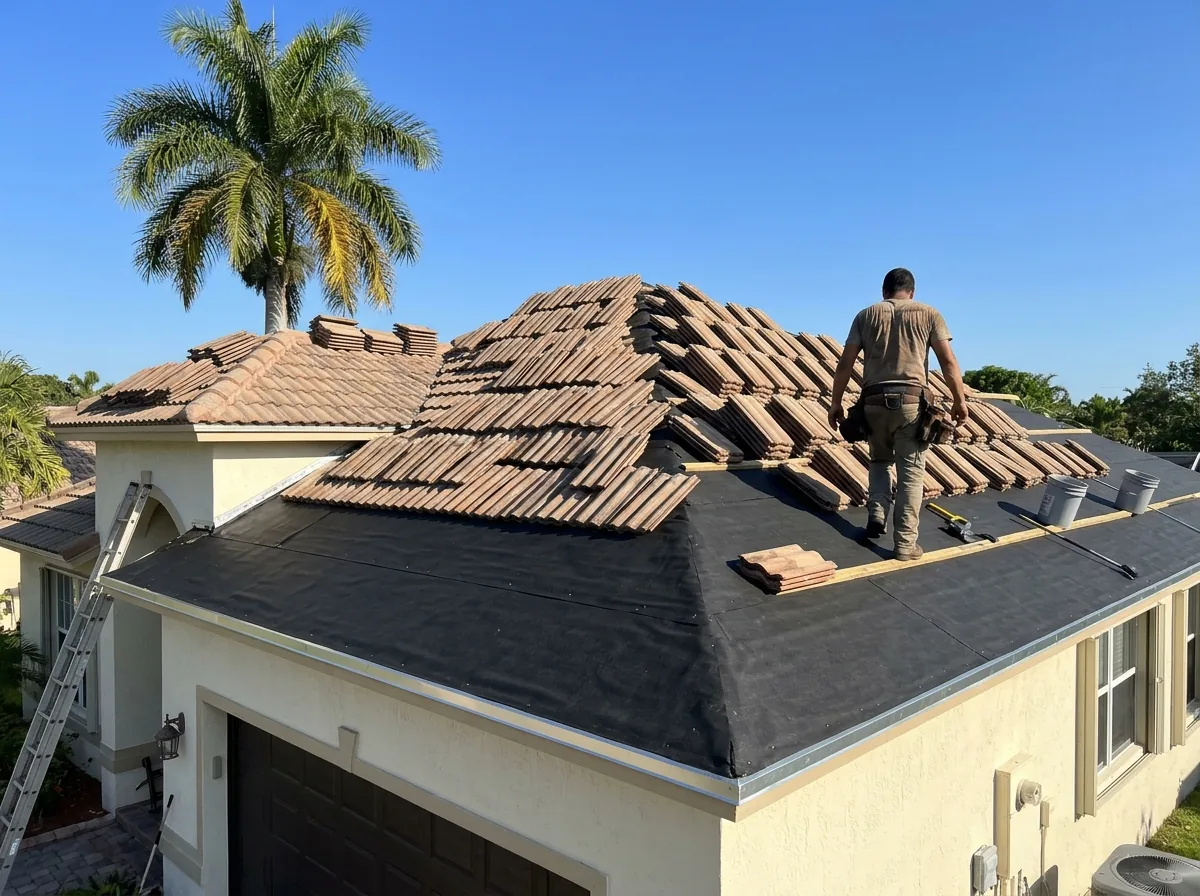
Lift and relay (tile reused)
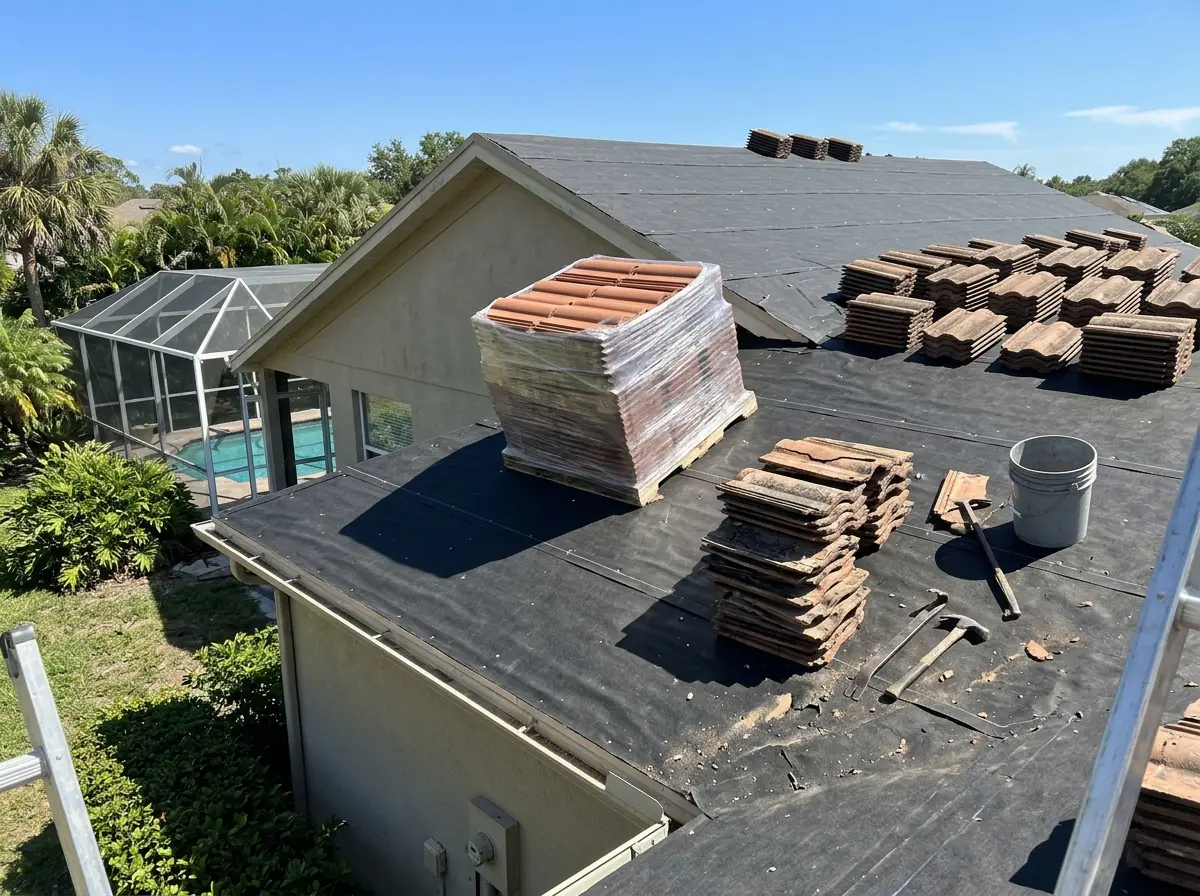
Some roofers call this job lift and relay: the tiles come off, new underlayment goes down, and the original tiles are set back. It works because tile usually outlasts the layer under it. Everything else about a re-roof still applies once the deck is bare, from rotted sheathing that has to be replaced to the permit and inspections. The City inspects the new underlayment before the tile goes back.
- Per 100 square feet: HomeGuide prices relaying the same tile over new felt at about $650 to $1,400.
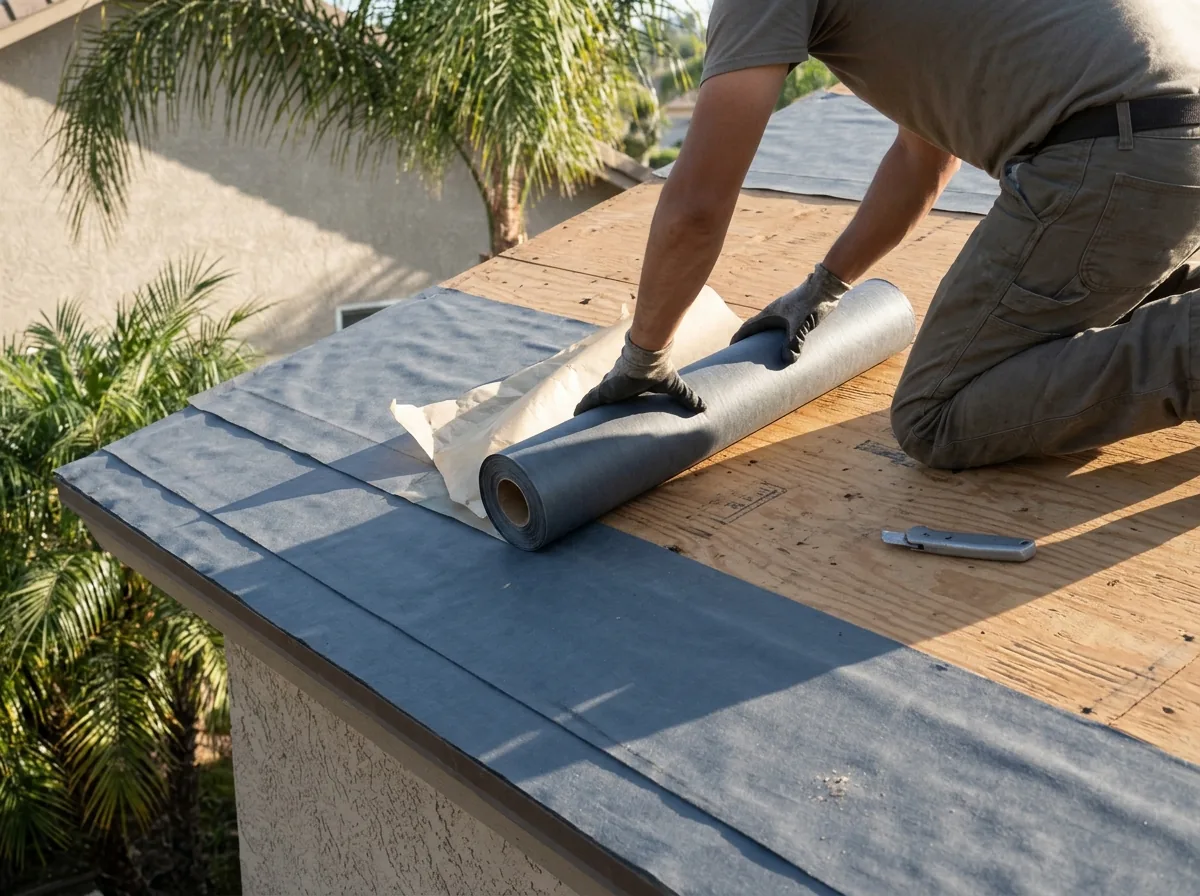
Self-adhered underlayment
Peel-and-stick membrane bonds straight to the deck. The FRSA-TRI manual calls one layer of it a single-ply system and sets a 40 mil minimum in SBS, APP or an approved equal. It's also the one type the state's wind mitigation form counts as secondary water resistance, as long as it's fully adhered and meets ASTM D1970; the inspection page covers what that credit means.
- Material only: rubberized SBS about $0.20 to $0.90 a square foot.
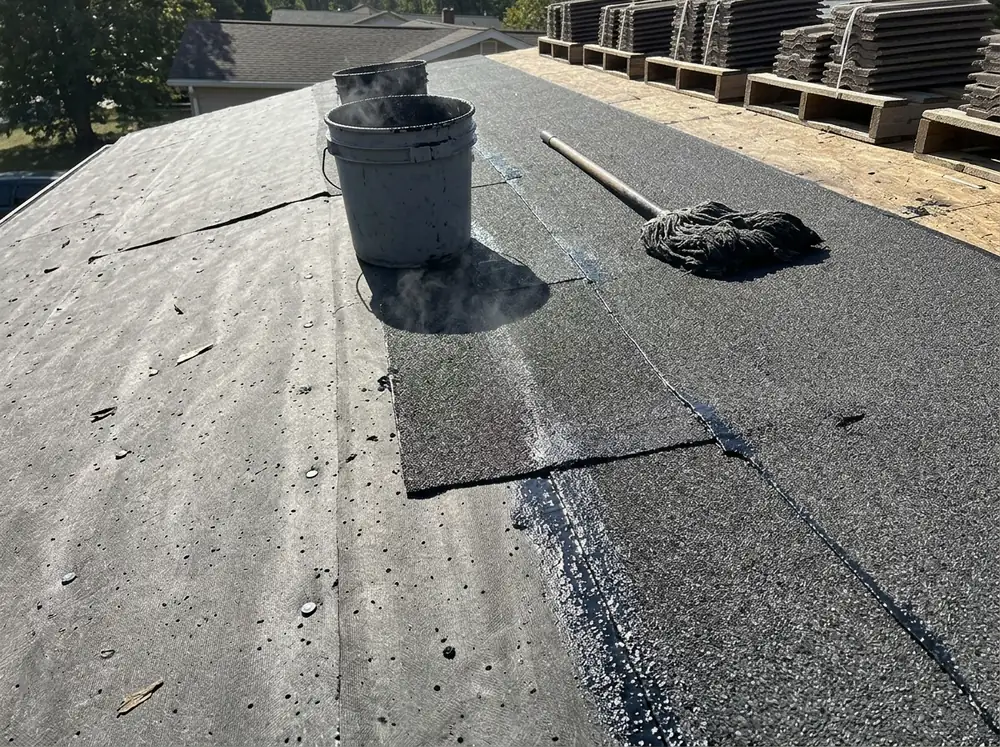
Hot-mopped underlayment
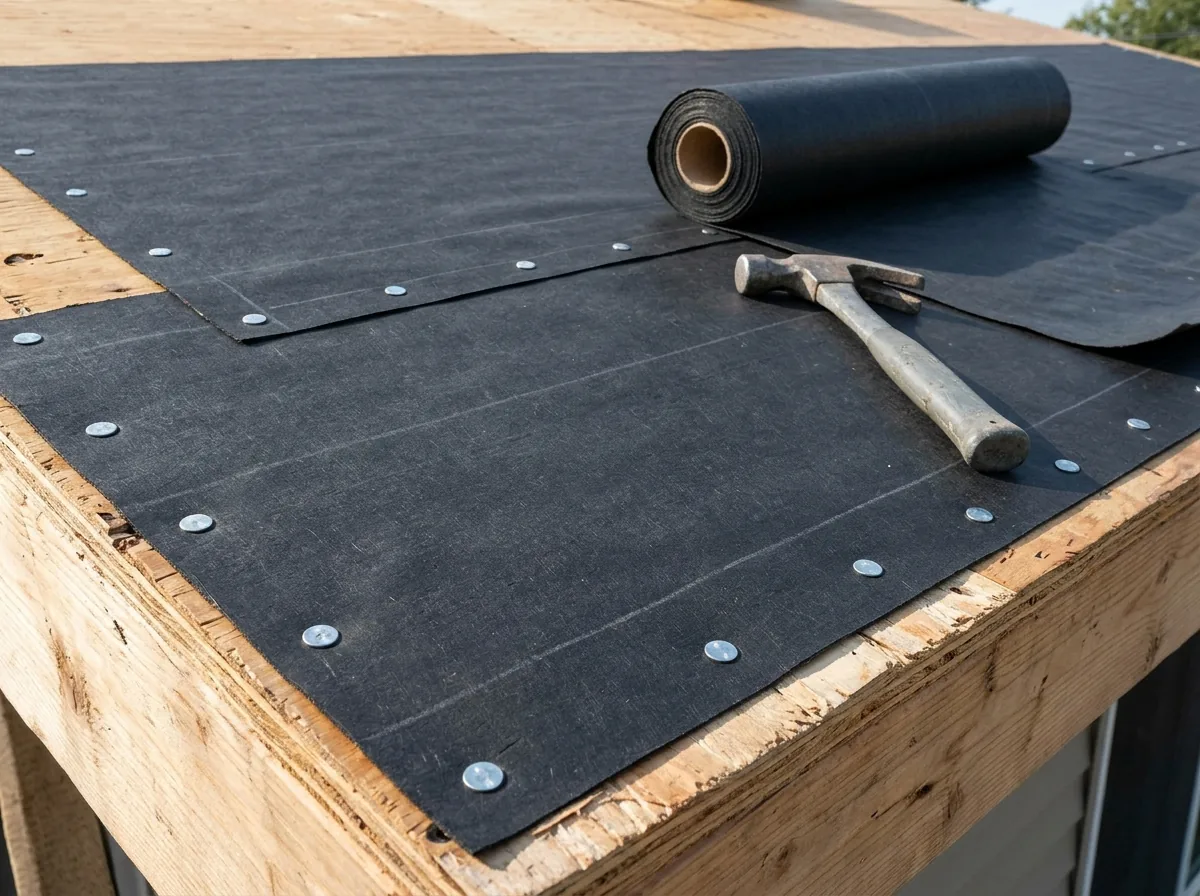
Hot mop is a two-ply system: a base sheet on the deck, then a cap sheet set in hot asphalt. Under the manual, cap sheet headlaps are at least 3 inches and back-nailed every 12 inches. The HVHZ inspection list includes one during or after the base sheet and another while the cap sheet goes on. The state form says hot-mopped felts don't count as secondary water resistance, which matters if you're chasing a wind mitigation discount.
Mechanically fastened and synthetic underlayment
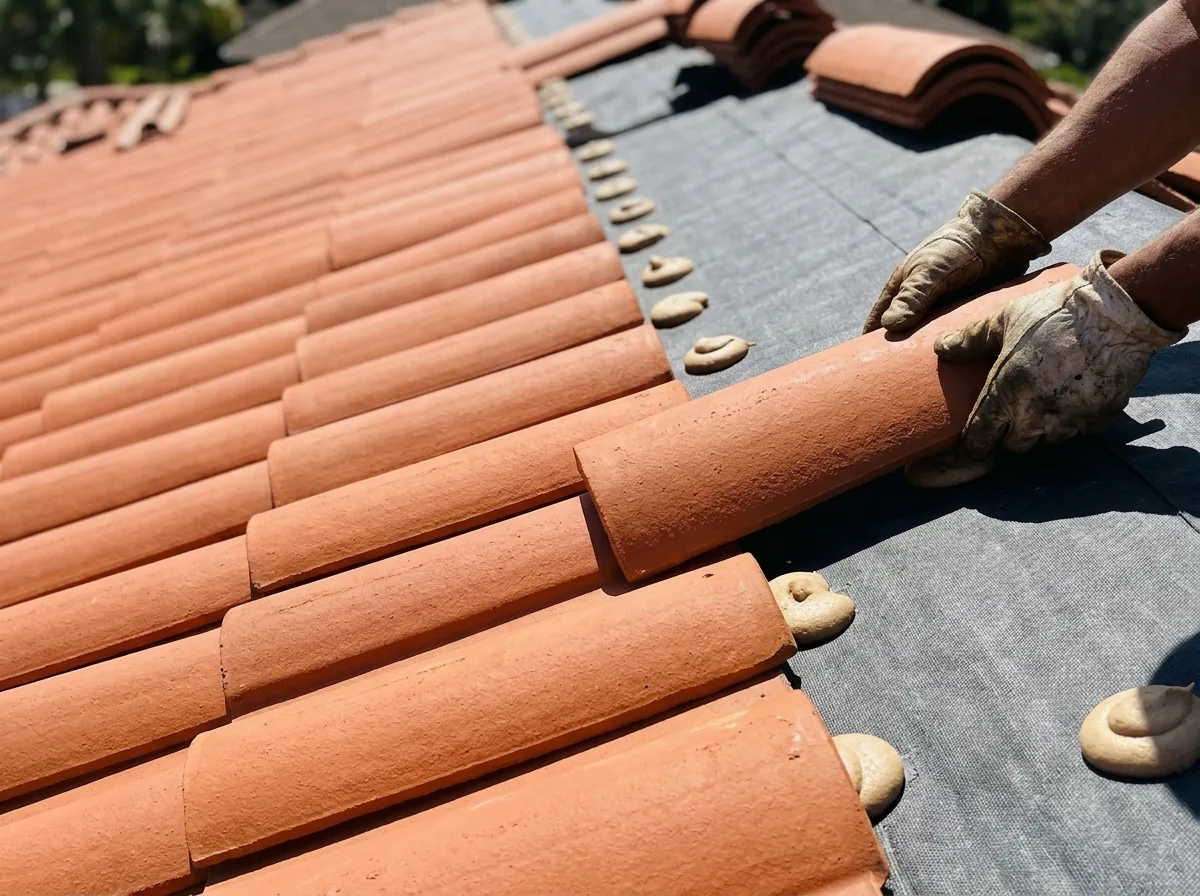
In a two-ply system the base sheet can be nailed instead of stuck down, with the cap sheet adhered over it. In the HVHZ those nails are ring-shank and go through tin caps 1 5/8 to 2 inches across, or a cap nail that meets the same test. Synthetic and felt sheets are cheaper by the square foot, and a This Old House source suggests polypropylene for hot, sunny climates. Any tile underlayment has to pass the FM 4474 or UL 1897 uplift test.
- Material only: felt about $0.05 to $0.15 a square foot; synthetic about $0.10 to $0.35.
Replacing tiles that break during the relay
Some tile breaks when it's lifted, stacked and reset, and Florida's code doesn't allow cracked or broken tile back on. Salvaged tile can fill gaps only if it matches the original in material and profile. Older concrete profiles may be out of production, so finding matching tile is worth sorting out before tear-off.
- New tile: a pallet costs about $1,100 to $1,400 and covers roughly 250 to 350 square feet.
Why Pompano Beach homeowners call Pompano Tile Roofing
- Free to call, free to request a quote
- One independent local tile roofer per request, not a bidding list
- Ask for tear-off, underlayment, deck repair and permit on one written price
- Your details go only to the roofer handling your request
Underlayment Replacement Cost by Roof Size
HomeGuide's figures are national and include labor; This Old House quotes underlayment alone at $0.50 to $2 a square foot.
| Roof area | Typical underlayment replacement |
|---|---|
| 2,000 sq ft | $1,500 to $8,000 |
| 2,500 sq ft | $1,900 to $10,000 |
| Overall range | $1,100 to $9,000 |
HomeGuide ties the spread to the underlayment type, the roof size and the condition of what's under it. On a quote, the lines that move most are rotted decking, the allowance for broken tile and the permit.
What to Settle Before the Tile Comes Off
The system by name
Single-ply or two-ply, the product, and its Florida Product Approval or NOA number.The deck
The City doesn't have to inspect renailing, so ask for photos of the bare deck and of any sheets replaced.Breakage allowance
How many replacement tiles the price includes, and where they'll come from.Payment terms
The Florida deposit rule on a tile roof replacement applies here too; get the schedule in writing.
Pompano Tile Roofing sends your roof details to one roofer; ask for a few tiles to be lifted so you can see the underlayment before deciding on a relay. See tile roof leak repair if a single leak is the only problem so far.